
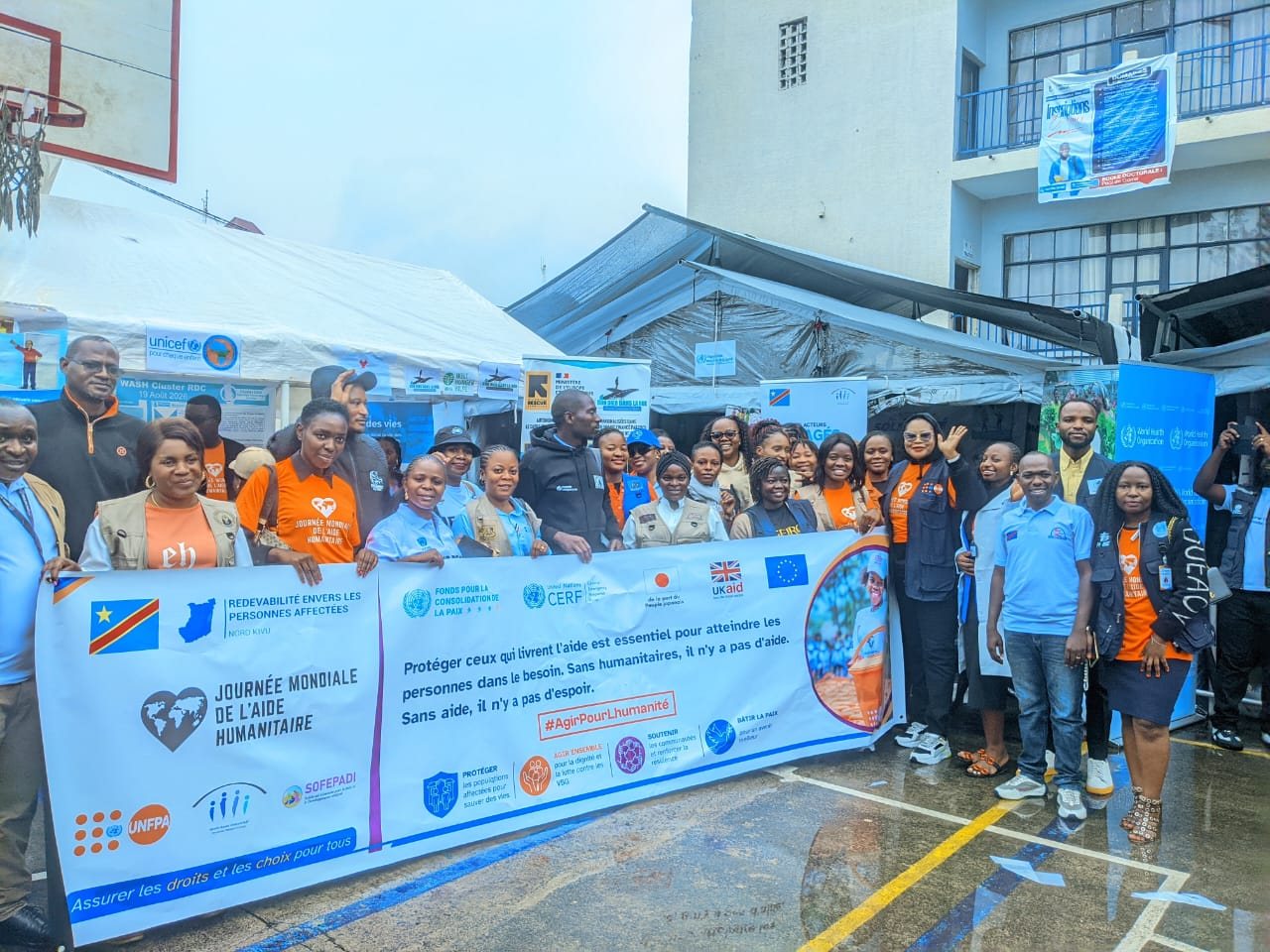
THE UNITY THAT TRANSFORMS SOLIDARITY INTO IMPACTWorld Humanitarian Day | August 19, 2026 | University of Goma – North Kivu Under the leadership of the Office for the Coordination of Humanitarian Affairs (OCHA) – North Kivu
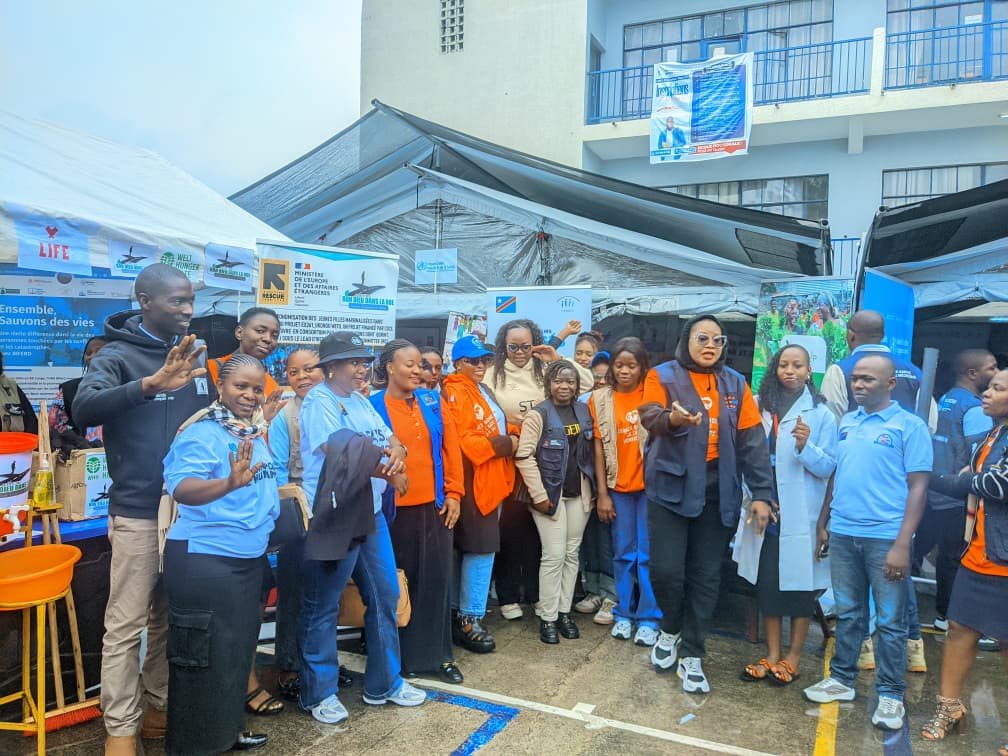
AN ENGAGEMENT IN ACTION
FED Asbl at the heart of humanitarian mobilization
On the occasion of World Humanitarian Day, celebrated on August 19, 2026, at the University of Goma, around the theme "ACTING FOR HUMANITY", Femmes Entrepreneures pour le Développement (FED Asbl) took an active part in raising awareness and mobilizing humanitarian actors gathered under the leadership of the Office for the Coordination of Humanitarian Affairs (OCHA) in North Kivu.
This meeting brought together around 200 humanitarian actors, notably from:
- National NGOs;
- International NGOs;
- United Nations agencies;
- Partners and actors involved in the humanitarian response.
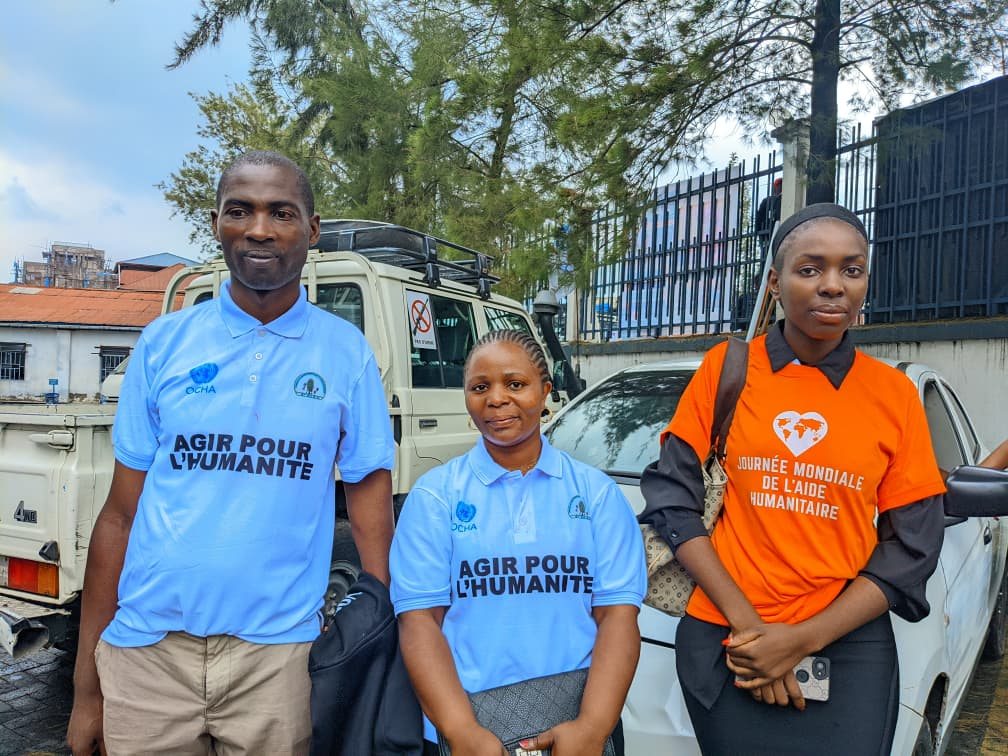
For FED, this participation represents more than an institutional presence. It reflects a constant commitment to contribute to spaces where humanitarian actors reflect together, share their experiences, and seek more effective ways to respond to the needs of communities affected by crises.In a context marked by armed conflicts, displacement, poverty, and weakened livelihoods in eastern DRC, acting for humanity also means acting together.
200 ACTORS, ONE SAME HUMANITY
Gathering forces to better respond to crises
The diversity of the organizations present recalled a fundamental reality: no organization can, on its own, respond to all the humanitarian challenges faced by communities. National NGOs, international NGOs, United Nations agencies, and other partners each possess different skills, experiences, and capacities. True strength therefore lies in complementarity.
FED delivered a message to the participants encouraging actors to strengthen:
- Coordination,
- Solidarity,
- Accountability,
- Integrity,
- Respect for humanitarian principles,
- And the collective search for solutions.
The objective is not simply to work side by side. It is about working together toward a single purpose: serving humanity and strengthening the dignity of communities.
THE VOICE THAT MOBILIZES
When art becomes a humanitarian tool
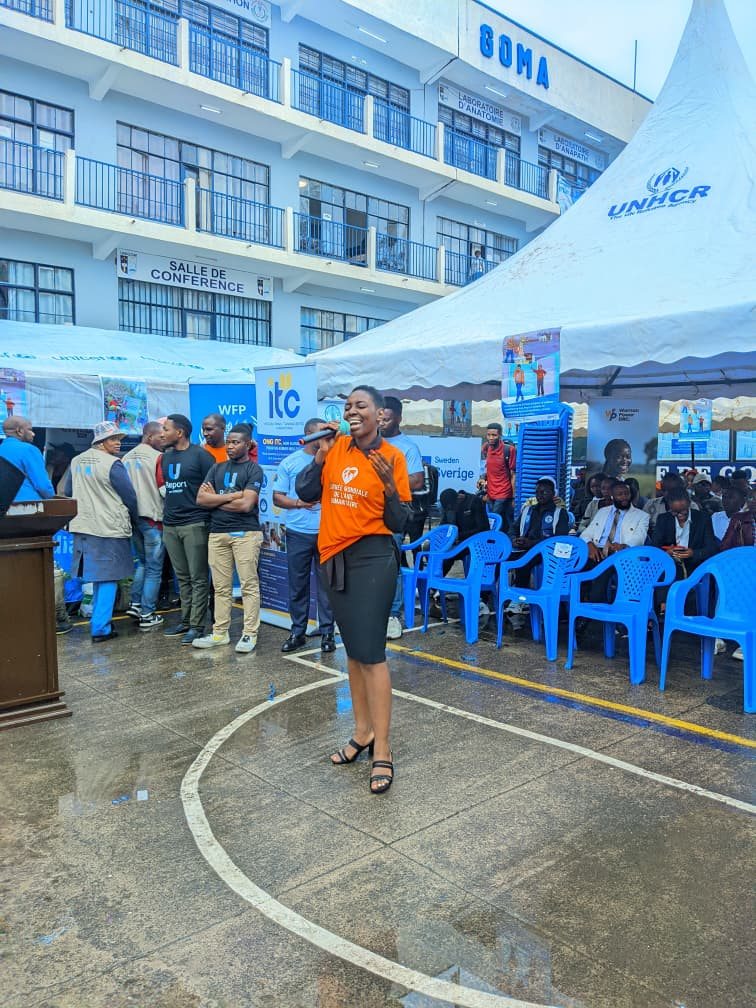
One of the highlights of FED’s participation was the intervention of Ms. Lysa BINDU, a spoken word poet and one of FED Asbl's fundraisers. Through her slam poem: "ACTING FOR HUMANITY", she transformed the humanitarian message into an artistic, accessible, and mobilizing experience.
Her intervention emphasized an essential conviction: the unity of humanitarian actors, respect for principles, standards, accountability, and humanitarian commitments constitute essential levers to strengthen the impact on communities.
In an environment where crises are complex and protracted, art thus becomes a means of raising awareness differently, creating a shared emotion, and reminding everyone that behind every program, every project, and every indicator are women, men, children, and communities whose dignity must remain at the center of the action.
BEYOND WORDS
Transforming awareness into consciousness
The message carried by FED did not only aim to raise awareness. It invited each actor to ask themselves:
- What can we do differently?
- How can we collaborate better?
- How can we ensure that our interventions produce changes that outlast the duration of a project?
This approach aligns with FED's philosophy: an effective humanitarian intervention must not only respond to immediate needs but also contribute, when the context allows, to strengthening the capacities, resilience, and autonomy of communities.
A MESSAGE THAT RESONATES
When participants make the message their own
The presentation of the slam poem generated interest among the participants and the OCHA representatives present at the activity. Mr. Bonduin and his colleague Sylvain from OCHA particularly appreciated this awareness-raising approach and encouraged participants to take ownership of the message in order to share and popularize it beyond this meeting alone.
A powerful idea thus emerged: "ACTING IN UNITY INFLUENCES A POSITIVE IMPACT."
The message therefore goes beyond the framework of World Humanitarian Day. It invites actors to make unity a daily working principle: sharing, coordinating, learning, complementing each other, and acting together.
FROM AWARENESS TO MOBILIZATION
Creating spaces that inspire actionFollowing this intervention, FED also received interest from several actors wishing to explore similar approaches in their own projects and awareness-raising activities. The expressed idea was to develop awareness-raising initiatives that are not solely informative, but can also:
- Create a breathing space for communities;
- Deliver accessible messages;
- Strengthen cohesion;
- Mobilize participants;
- Stimulate solidarity;
- Promote the search for concrete solutions;
- Bring actors closer to the realities lived by communities.
For FED, this reaction confirms the value of an approach that combines communication, creativity, community mobilization, and humanitarian action.
Our approach: RAISE AWARENESS → GATHER → MOBILIZE → ACT → MEASURE IMPACT
ACTORS, COMMITMENTS, ONE DIRECTION
Building a common culture of responsibility
The presence of actors from different organizations helped reinforce a common message around four commitments:
- UNITY: Because humanitarian crises require coordinated and complementary responses.
- RESPONSIBILITY: Because every intervention must be guided by humanitarian principles and accountability toward affected populations.
- INTEGRITY: Because the trust of communities, partners, and donors relies on responsible and transparent practices.
- SOLUTION ORIENTATION: Because humanitarian action must also seek, when conditions permit, to strengthen the capacities of communities to rebuild their future.
FED AND ITS PARTNERS: HAND IN HAND
Solidarity as a collective strength
The participation of actors such as UNFPA, United Nations agencies, national and international NGOs, and other humanitarian partners illustrated the necessity of a collective approach to the challenges of eastern DRC.
FED wishes to continue building bridges with these various actors. Our conviction is clear: Partnerships should not only allow for the implementation of projects; they must enable the sharing of knowledge, capacity building, and the multiplication of impact. It is within this dynamic that FED intends to pursue its commitment alongside the humanitarian ecosystem.
THE COMMUNITY AT THE CENTER
From assistance to empowerment
For FED, acting for humanity also means looking beyond the emergency. Communities affected by conflicts are not merely beneficiaries of assistance. They are also: actors, entrepreneurs, leaders, innovators, and partners in their own recovery.
This vision guides FED's interventions in economic empowerment, inclusion of people living with disabilities, education, protection against gender-based violence, leadership, and digital inclusion. It is notably at the heart of the MWANAMUKE SIMAMA initiative, which aims to strengthen the financial autonomy of women, youth, and people living with disabilities through Village Savings and Loan Associations, financial education, entrepreneurship, and digital tools.
AN EXPERIENCE THAT STRENGTHENS FED'S VISION
From Goma toward a broader dynamic
World Humanitarian Day on August 19, 2026, offered FED an important opportunity: to listen, contribute, raise awareness, mobilize, and learn alongside other actors. It also confirmed the relevance of an approach in which humanitarian communication is not limited to transmitting information, but seeks to create:
- Awareness;
- Collective responsibility;
- A willingness to act;
- A culture of collaboration;
- Mobilization around solutions.
FED wishes to capitalize on this experience in order to strengthen its capacities for awareness, mobilization, and partnership.
OUR COMMITMENT FOR THE FUTURE
ACT. UNITE. TRANSFORM.
FED Asbl reaffirms its commitment to contribute to a humanitarian action that is: more inclusive, more responsible, more coordinated, and more oriented toward sustainable solutions.
We will continue to work with communities and partners to promote:
- Dignity rather than dependency,
- Participation rather than exclusion,
- Collaboration rather than isolation,
- Solutions rather than waiting.